


From Port Replicator to Power Hub: The Evolution of the Game Dock & What It Means for Your Switch 2 🚀


Game docks have evolved from simple video output boxes to essential performance hubs. We trace this journey, analyze today's needs for 4K, low-latency, and portability, and explore what the next generation truly requires for the ultimate Switch 2 setup.🔥
A Humble Beginning ✨
Remember the first time you slid your original Nintendo Switch into its dock? It felt like magic —a portable console instantly transforming into a home console. That first dock, however, was a device of singular purpose: a Port Replicator. Its job was straightforward—pass through power, output a video signal (1080p), and offer two USB ports. It was functional, but it was also bulky, plasticky, and purely stationary. It reflected an era where "TV mode" was a bonus feature, not a primary platform for competitive or high-fidelity play.
The Present: The Rise of the Performance Dock ⚡
Fast forward to today. The landscape of portable gaming has exploded 💥. The Steam Deck, ROG Ally, and Lenovo Legion Go haven't just released consoles; they've ignited a culture of portable powerhouses. Their users don't just want to play on a bigger screen; they demand to do so without compromise. This shift, coupled with the already released 4K-enabled Switch 2, has completely rewritten the docking station standard.
The modern dock is no longer a simple replicator; it's a Performance Hub 🎯. The conversation has moved beyond "does it display an image?" to critical questions:
- Network: Does it have Gigabit Ethernet for lag-free, competitive online play?
- Visuals: Does it support HDMI 2.1 to unlock 4K@120Hz for breathtaking smoothness?
- Thermals: Can its design dissipate heat to prevent performance throttling during marathon sessions?
- Portability: Is it built for a mobile lifestyle, or does it tether you to one TV?
- Power: Can it deliver enough wattage to charge the device while it runs at full tilt?
The official docks for current devices often leave gaps in this checklist, prioritizing cost and simplicity over peak performance. This has created a clear demand from enthusiasts: a hub that doesn't just connect, but enhances 🔋.
The Future & The Pain Point: The Need for a Unified, Portable Nerve Center 🎮
Here lies the central dilemma for the upcoming Switch 2 owner and modern handheld gamer: How do you build a single, elegant setup that delivers maximum performance for both high-stakes gaming and professional versatility, yet remains ready to go wherever you do? 🤔
You want the rock-solid stability of a wired internet connection for your Splatoon matches 🎯. You crave the visual fluidity of a high-refresh-rate output for fast-paced action 🏃. You need enough ports for a keyboard, an external drive, or a controller dongle ⌨️. And above all, you need this hub to be as sleek, cool-running, and travel-ready as the cutting-edge devices it serves. The legacy of the bulky, minimalist dock is at odds with this multi-faceted future.
Engineering for the Next Era 🔧
At RUNTOGOL, we see this evolution not as a challenge, but as a design blueprint. We asked: what would a dock look like if it was born from today's needs, not yesterday's limitations? 💡
The answer is engineered into our 1000M Ethernet Switch 2 Dock:
🛡️ Material as Mission: We moved from insulating plastic to a durable aluminum alloy chassis. This isn't just for premium feel; it's a functional heat sink that actively draws heat away from your device, directly addressing the thermal throttling concerns of intense, docked play sessions.

🎒 Portability as Principle: A performance hub is useless if it's stuck at home 🏠. Our compact, lightweight form factor is designed to be the travel companion your portable console deserves, fitting effortlessly into any backpack.

🔗 Connectivity as Core: We built around the non-negotiables: a 1000M Ethernet port for unshakeable online play 🌐, an HDMI 2.1 port ready for 4K@120Hz fidelity 🎬, and high-speed USB 3.0 ports for rapid data transfer and peripherals. The 100W USB-C PD input ensures your device charges at full speed, no matter the load.


🔌 Compatibility as Standard: Recognizing that gamers often own multiple devices, we engineered for the ecosystem—seamlessly serving not just the Switch 2, but also your Steam Deck, ROG Ally, and more 🎮.

Your Dock Should Evolve With You 🚀
The journey from the simple port replicator to the all-in-one performance hub is complete ✅. The question is no longer if you need a dock, but what capabilities that dock must bring to your setup to be worthy of next-generation hardware.
As we stand on the brink of the Switch 2 era, the choice is clear: settle for a basic passthrough, or invest in a hub designed to unlock stability, visual fidelity, and versatile performance.
Explore the design that’s built for where gaming is going, not where it's been. 🔮
Recent Blogs
January 06, 2026
From Port Replicator to Power Hub: The Evolution of the Game Dock & What It Means for Your Switch 2 🚀
Game docks have evolved from simple video output boxes to...

 December 29, 2025
No More Scratches: Meet the Adjustable Dock for Switch 2🛠️✅
A Glimpse of Gamer Frustration 🎮 A quick glance at...

 December 10, 2025
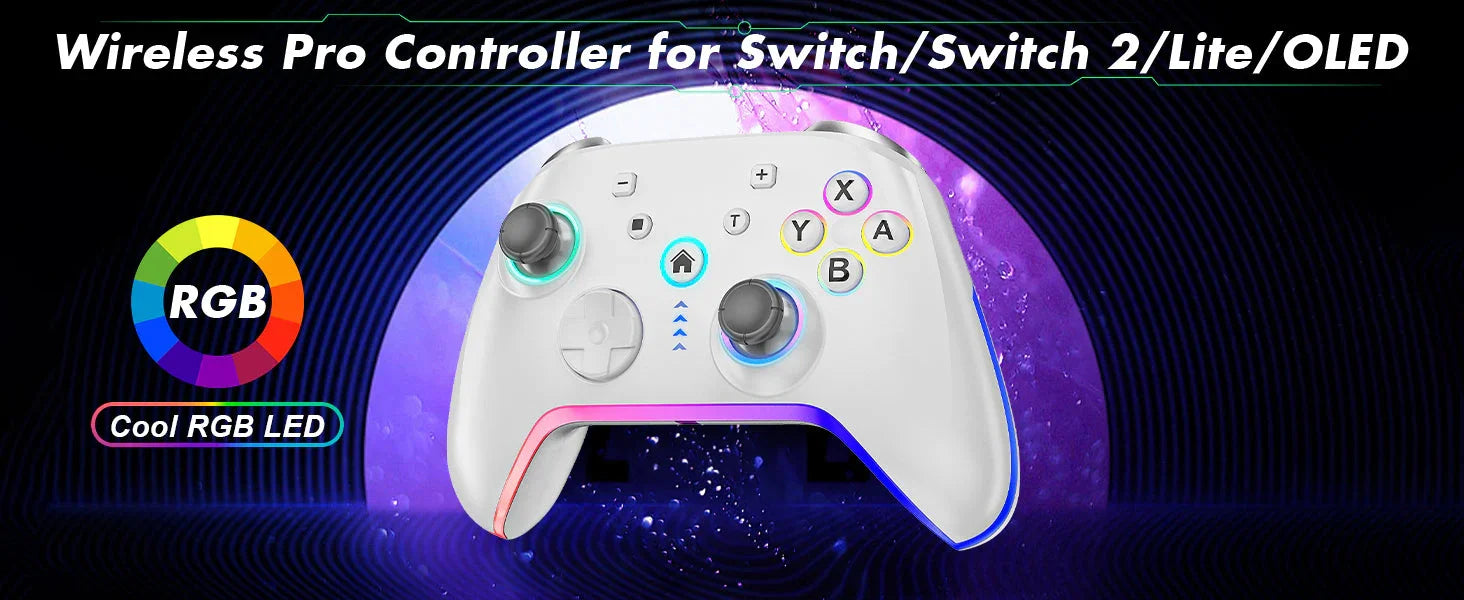
Game On, Level Up: Meet Your New Favorite Wireless Pro Controller 🎮✨
Tired of fighting with your controller when you should be...